A Dialogue with Sarb Glaze
Before fully dedicating herself to the canvas, Sarb spent years capturing the unedited, pure personalities of children through portrait photography. Today, that exact lens translates into her paintings. Her work does not begin with a rigid plan; instead, it unfolds organically through color, gesture, and feeling, often revealing hidden memories—from the nostalgic scent of fresh-cut grass to the deeply personal sense of belonging symbolized by a single hydrangea.
In this exclusive interview, Sarb discusses how photography taught her to find the soft, quiet moments within chaos, why she believes art needs a clean space to breathe, and how an artwork can reveal parts of our own history before we even realize we are holding them.
Dive into a conversation about growth, memory, and the beauty of letting a painting find its own voice.
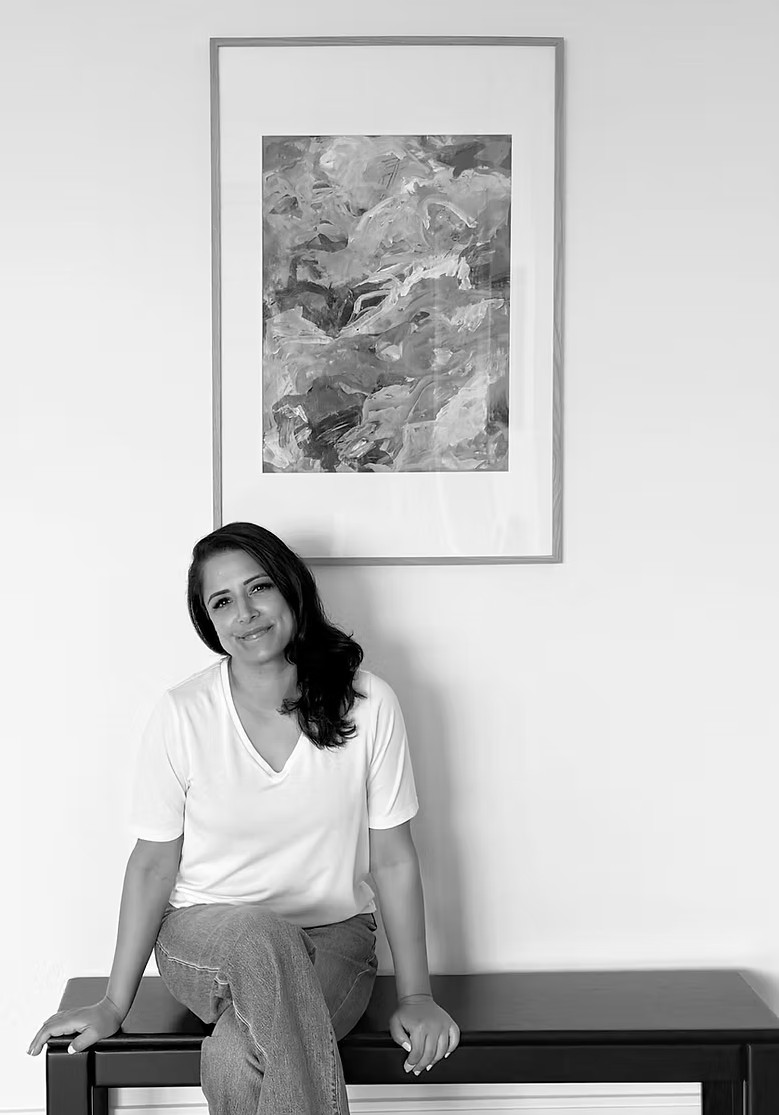
On Photography and Painting: Your creative career began in portrait photography, capturing gestures and energy, before transitioning into intuitive acrylic painting. How does your photographer’s eye influence the way you build layers and find the balance between chaos and calm on a blank canvas?
It was specifically photographing children that I think influenced the way I intuitively create my paintings. Every child had a different personality, and the photo sessions usually started with a lot of energy. There was always something beautiful happening within that energy. I wasn’t just photographing a child, I was capturing their personality and creating a record of their memories and experiences. I photographed not only the fun and excitement, but also the tender moments and small details. It was their eyes, their little hands, and the glances they would give to me, their siblings and their parents.
I approached each session wanting to capture all of it: the chaos and the calm, the movement and the stillness. In a lot of the same way, my paintings often begin full of energy, with large gestural strokes. I’m releasing my energy onto the canvas. Then I step back and look at what is happening on the canvas. I begin to calm things down where I feel it’s needed, adding softer areas within the energy.
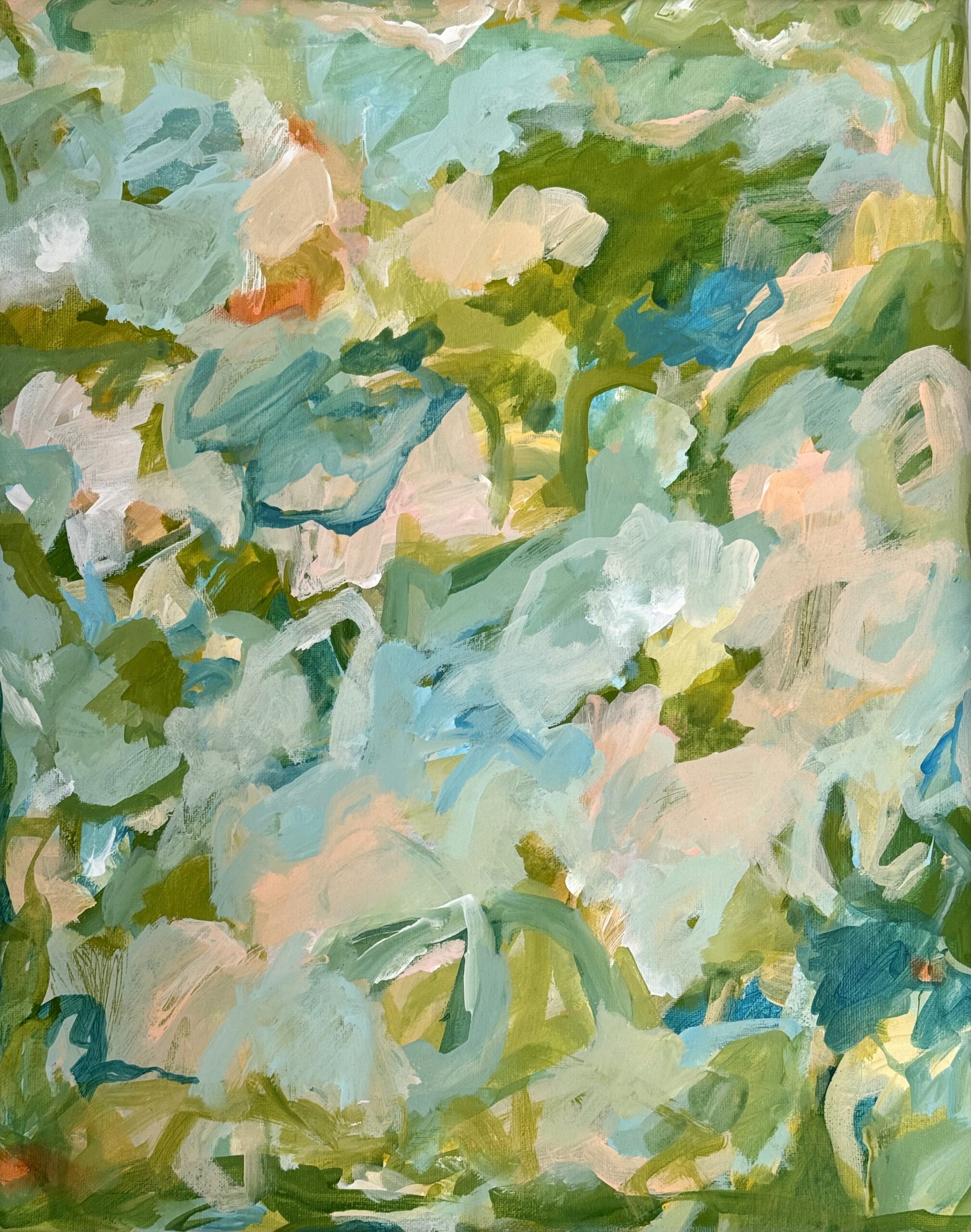
On Childhood and Wonder: You’ve mentioned that you admire the honesty and spontaneity of children, striving to keep that same sense of wonder alive in your art. How do works like “Before I Close My Eyes” or “Saturday Feelings” help you reconnect with that raw, unfiltered childhood freedom?
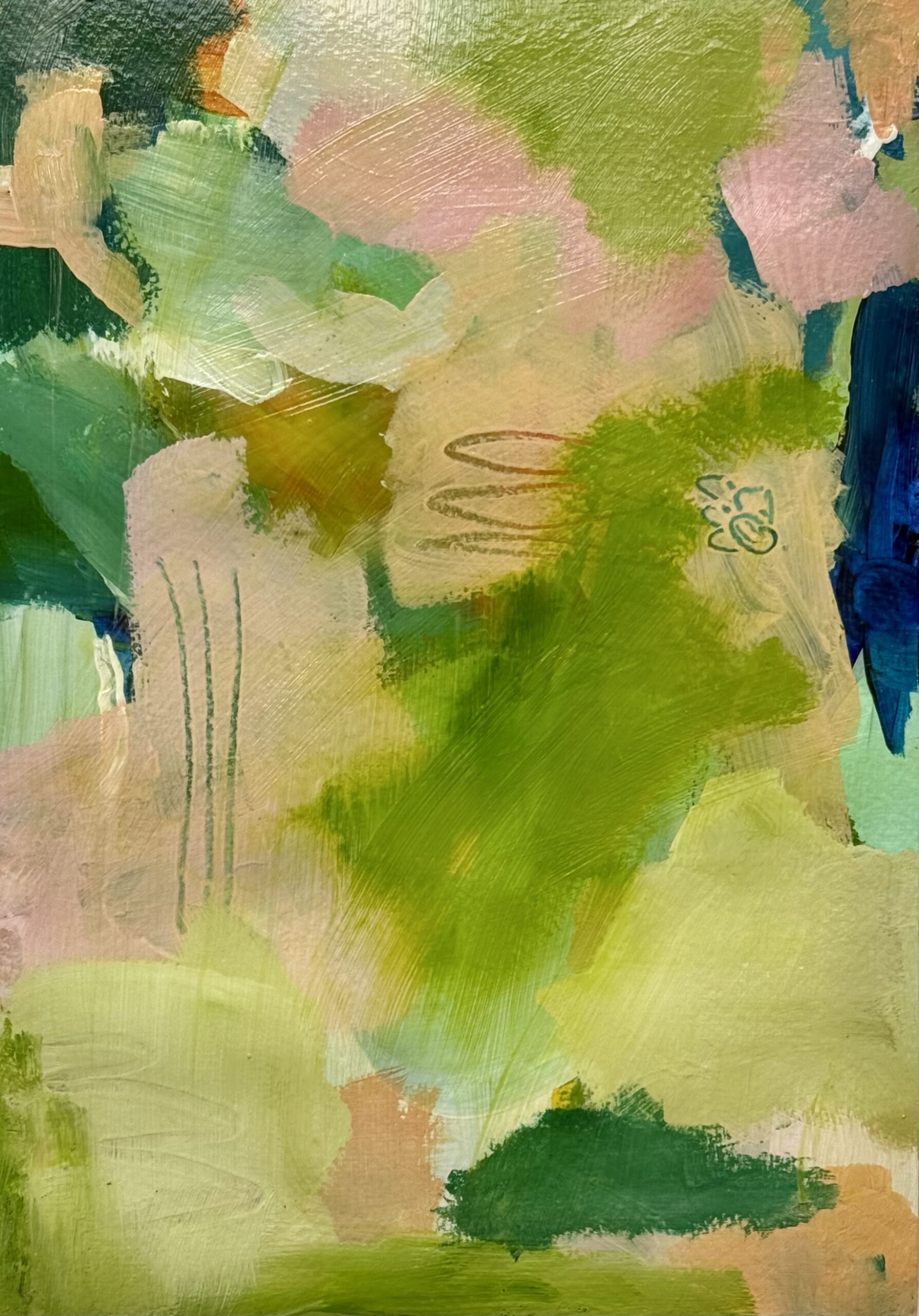
With Saturday Feelings, it’s the way children can start a day believing in the endless possibilities it might hold. There is an openness to that way of seeing the world, before we become weighed down by schedules, responsibilities, and expectations. I often think, imagine if adults approached their days with that same sense of possibility. That is something I try to bring into my paintings, that is to stay open, curious, and unrestrained, and to let the painting unfold rather than deciding exactly what it needs to become.
On the Clean Background: Exhibitions at Vivid Gallery strip away all external elements, presenting your work frame-free on a clean background. For an artist inspired by the vast natural beauty of the West Coast, does this digital openness allow your textures in pieces like “Dappled Light” to truly breathe?
On Sensory Memory: Your artist statement notes that you explore not how nature looks, but how it feels. When looking at the rich textures of “Fresh Cut Grass” or “Golden Glow”, how do you know when your emotional intuition has successfully translated a sensory memory onto the paper?
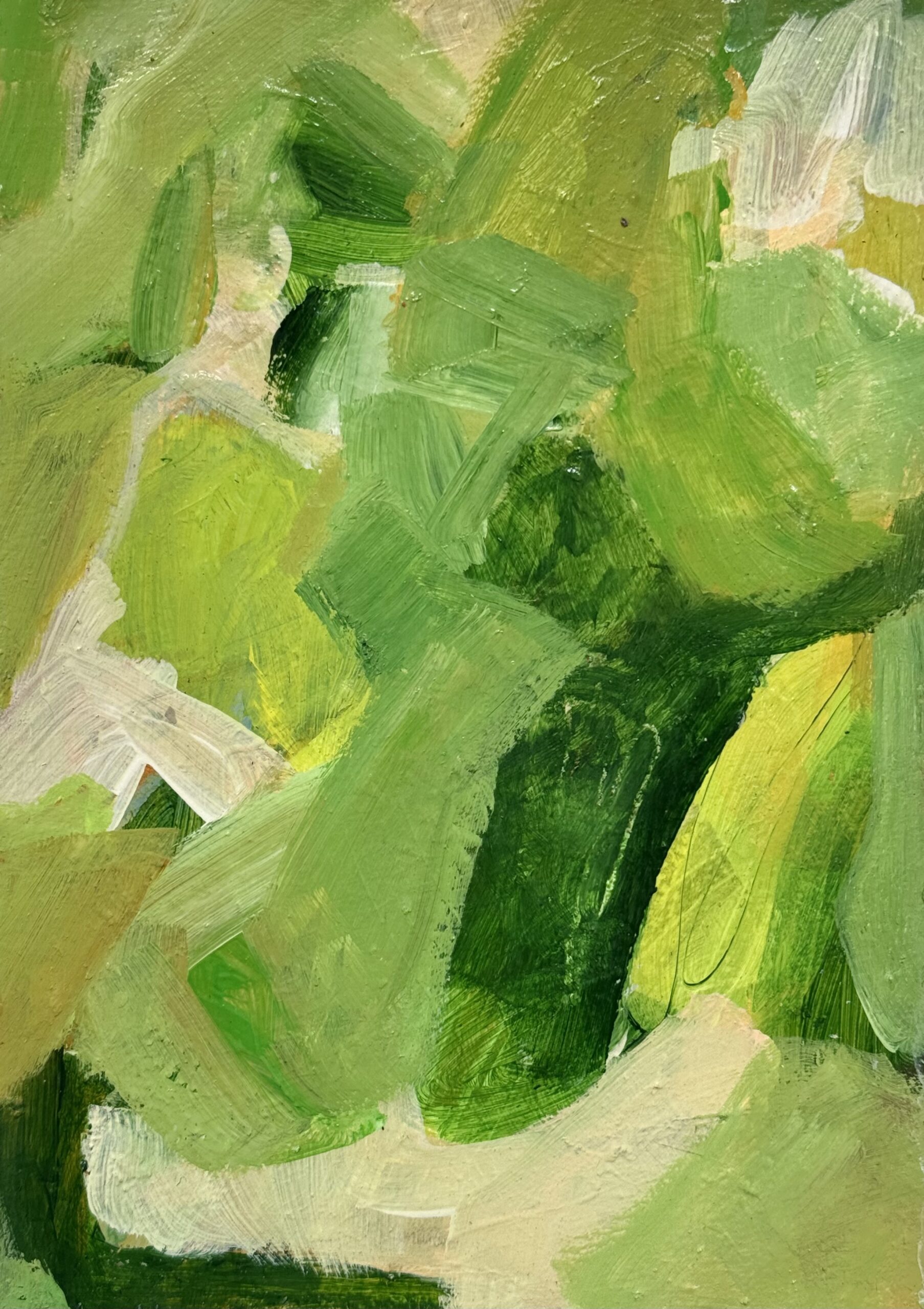
For me, it actually happens in the opposite way. Because I work intuitively, I don’t begin a painting with a specific memory or sensory experience that I’m trying to translate. I begin without a plan and allow the painting to unfold through colour, gesture, texture, and feeling. It’s often only once a painting is finished, or close to finished, that a memory or emotional connection comes up for me.
With Fresh Cut Grass, for example, it was after the painting was completed that I connected it to childhood summers. The scent of freshly cut grass, riding bikes through quiet neighbourhood streets, hot days, and that carefree feeling of being a child. The painting brought the memory forward rather than my going in planned with that memory.
I think that’s one of the things I love most about working intuitively. I don’t always know where a painting is going or what it might mean to me until I step back and take a closer look at it. Sometimes the painting reveals something I didn’t know I was holding. If a viewer then brings their own memories or feelings to it, that makes the work feel even more special to me.
On the Intimacy of the Flower: While most of your work is deeply abstract, pieces like “The Single Hydrangea” and “This Bloom is For You” introduce distinct floral forms. What do these specific “blooms” represent in your broader dialogue about growth, transformation, and renewal?
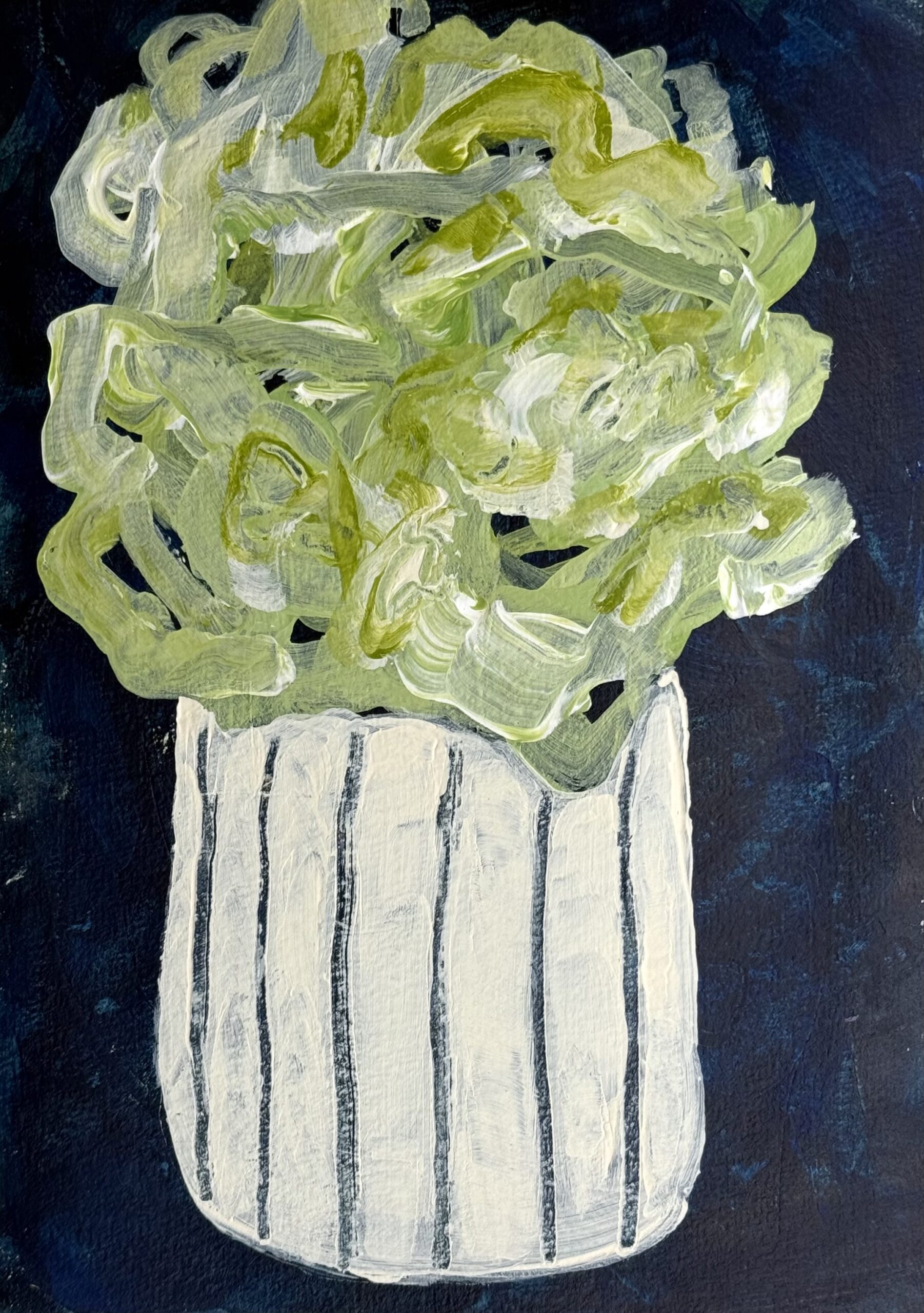
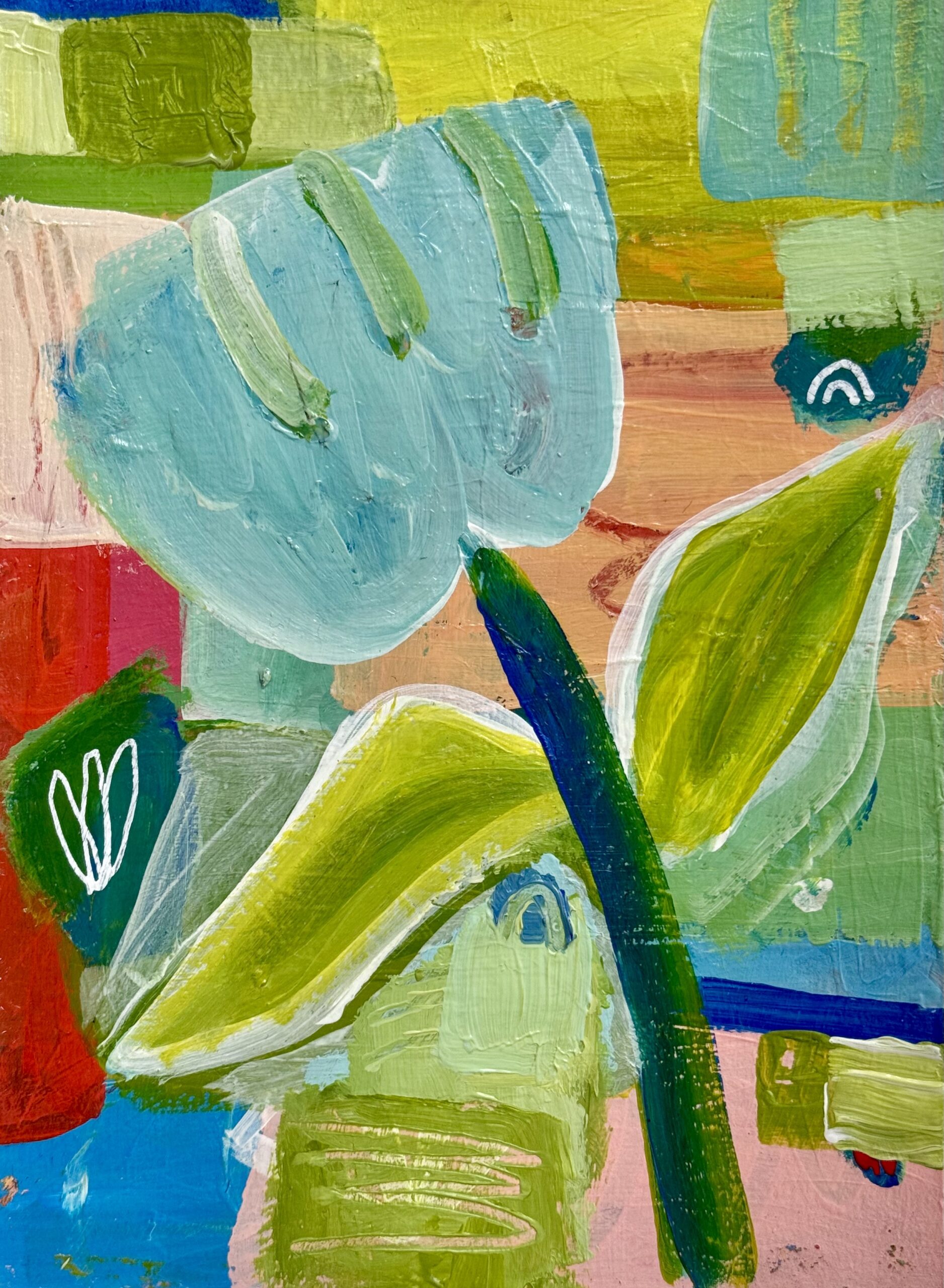
For me, flowers aren’t really something I set out to explore or give a specific meaning to. Because I work intuitively, their meaning usually comes through the painting itself or through the memories that come up for me afterward.
The Single Hydrangea is very personal to me. What started as just swirls turned into something that reminded me of a hydrangea, so I continued with the process and added a vase. My husband and I had hydrangeas at our wedding, and our first home had a garden full of green and white hydrangea bushes. I remember feeling that meeting a lovely neighbour and having that garden full of hydrangeas were little signs that our first home was the right place for us. So now, whenever I see hydrangeas, I’m reminded of our wedding, our first home, and that feeling of belonging.
This Bloom Is for You started out completely differently. I started the painting with no intention of creating a flower. I was working with blocks of colour and letting the painting develop, and at some point, I started to see an abstract flower emerging. I just followed it.
I think that’s where the connection to growth and transformation comes in for me. I’m often surprised by where a painting ends up. Something can start one way and become something completely different. I think there’s something lovely about allowing that to happen rather than trying to control the outcome.
- Instagram: @artbysarbglaze
- Website: artbysarbglaze.com
- Inquiries & Email: sarbglaze@gmail.com