A Dialogue with Robert A. Chavez
Memory, Respect & Digital Imagination
In this edition of VIVID Dialogues, we welcome Robert A. Chavez, an artist, author, and creative director whose work bridges the cultural heritage of the American Southwest with emerging digital technologies.
Through his artistic vision, Terra Incognita Realism, Chavez explores the relationship between memory, identity, tradition, and the unknown future. His work invites us to look beyond the image and consider the stories, cultural responsibilities, and human experiences behind its creation.
At the heart of our conversation lies a powerful principle: “Respect Is the Price of Admission.”
VIVID Art Gallery: How would you describe the visual language of this collection?
Robert A. Chavez: I call it Terra Incognita Realism: grounded dreams shaped from adobe, history, memory, and the unfinished future. The work may begin with something familiar—a wall, a horse, a trail, a family story—but it opens toward something not yet fully known.
VIVID Art Gallery: Why are New Mexico and the Southwest so central to the work?
Robert A. Chavez: New Mexico is not simply a setting for me. It is where memory, family, faith, landscape, and imagination meet. Adobe, mountains, old roads, petroglyphs, and night skies already contain history. I try to let that history remain grounded while showing the mystery that has always lived beside it.
VIVID Art Gallery: What role did Grandmother’s Trail play in the development of the art?
Robert A. Chavez: Grandmother’s Trail gave the visual world its structure. The book follows ten portals through memory and responsibility. As the images developed, I realized the portals were not only illustrations for a story. They had become a language that could continue beyond the book.
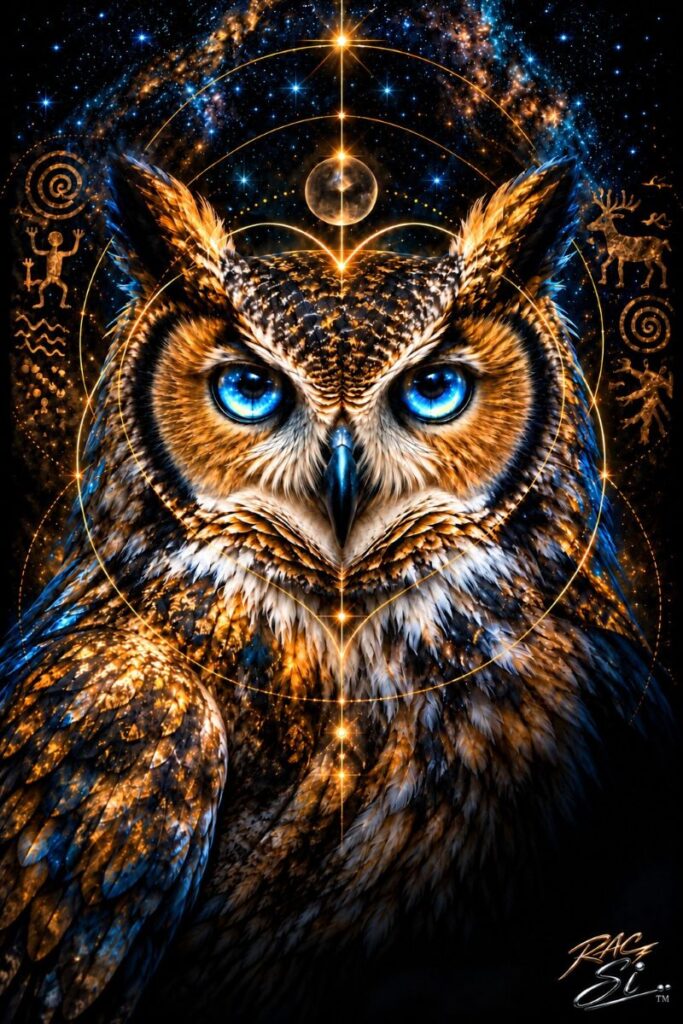
The Blue Eyed Owl — Robert A. Chavez
The guardian and the visual doorway into Grandmother’s Trail.
The blue-eyed owl became the guardian of the unseen trail. Its direct gaze, petroglyph language, and celestial geometry establish the central idea of the work: memory can become a passage, and the past can remain alive without being imitated.
VIVID Art Gallery: What do the portals represent?
Robert A. Chavez: A portal is any place where the familiar world opens into deeper understanding. It may be a petroglyph, an adobe doorway, a woven road, an animal, or a remembered voice. The ancient marks were never merely decorations. Perhaps they were doors—and we are only now remembering how to see them.
VIVID Art Gallery: How do you balance tradition with futuristic imagery?
Robert A. Chavez: The future should not erase the past. I begin with real materials and recognizable life—mud, timber, snow, horses, family, and labor. Then I allow stars, geometry, light, and passage to enter with restraint. The ancient past and tomorrow do not oppose each other here. They occupy the same world.
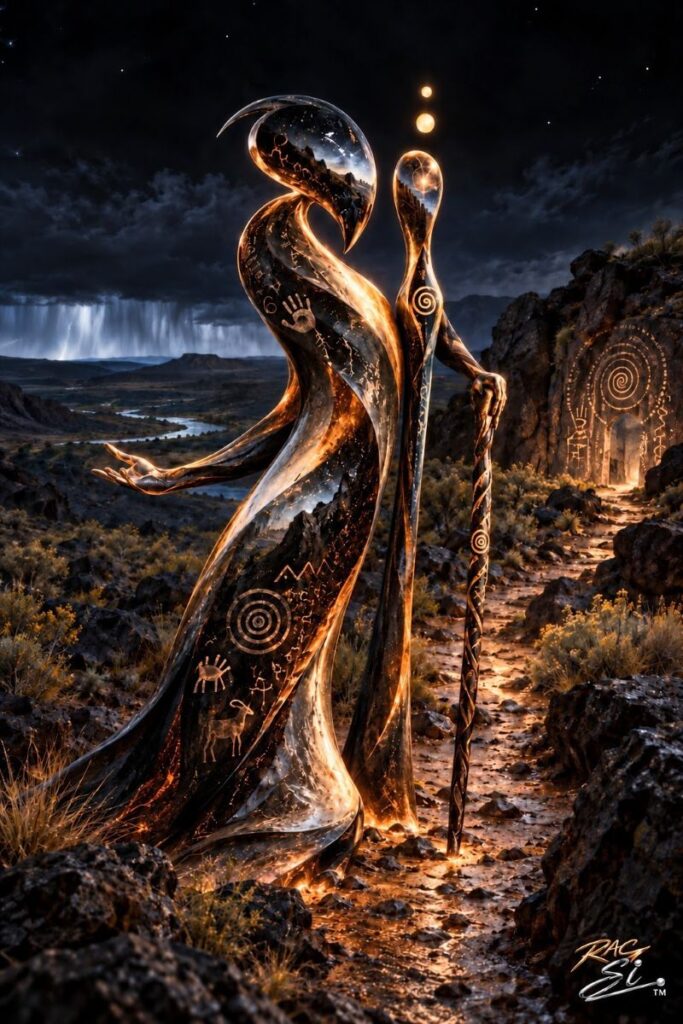
The Curandera at Tomorrow’s Gate — Robert A. Chavez
Ancient guidance approaching an unfinished future.
A solitary curandera carries the oldest wisdom toward a threshold no one has entered. The work places traditional knowledge and emerging intelligence on the same road, asking whether the future can be entered without abandoning memory, responsibility, or respect.
VIVID Art Gallery: What does RAC–SI mean within the project?
Robert A. Chavez: RAC–SI is the signature of the collaboration and the standard applied to the finished work. I direct the concept, story, composition, revisions, selection, and final approval through an iterative digital process. SI represents the emerging visual intelligence within that collaboration—not a robot, but something closer to a sculptural presence from an unfinished future.
VIVID Art Gallery: What do you want viewers to experience?
Robert A. Chavez: I want viewers to recognize something true before they understand why it feels unfamiliar. The image should remain grounded enough to enter, but open enough to carry them somewhere beyond explanation. Respect is the price of admission.
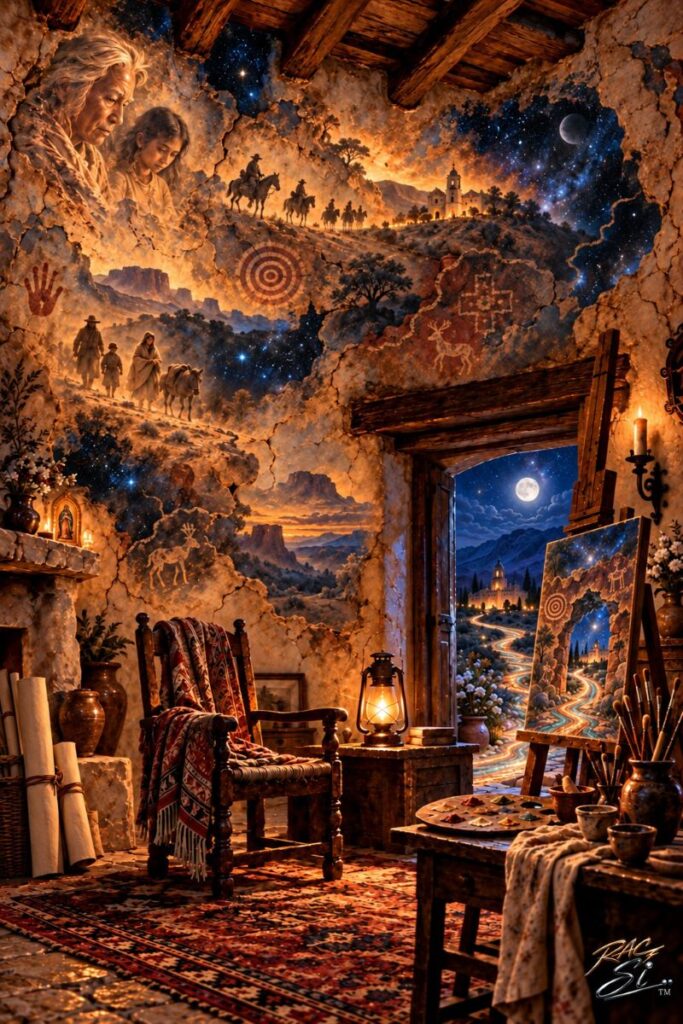
If These Walls Could Talk — Robert A. Chavez
Grounded dreams held inside adobe walls.
Generations, ancient trails, sacred symbols, and distant stars rise through weathered plaster while an empty artist’s chair waits beside the fire. The ancient marks were never merely decorations. Perhaps they were doors—and we are only now remembering how to see them.
VIVID Art Gallery: What comes next?
Robert A. Chavez: The immediate work is to introduce Grandmother’s Trail and the first curated BabaChavez.com collection. Future work will remain selective. New pieces will enter only when they carry the same depth of story, visual identity, and responsibility.
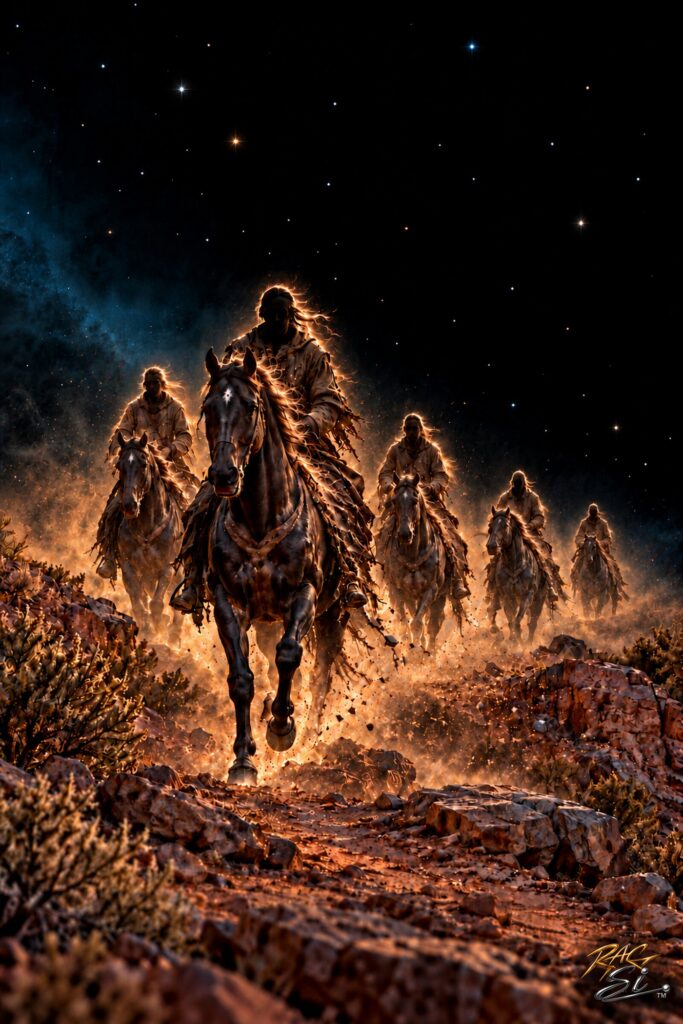
Ghost Riders of Glorieta — Robert A. Chavez
New Mexico history crossing into memory and myth.
Five spectral riders emerge from celestial darkness above an old trail through Glorieta Pass. History is not reenacted as a museum scene; it moves forward through dust, starlight, and an unfinished landscape where the remembered past still has momentum.
VIVID Art Gallery: Your work brings together human imagination and emerging digital technologies. Could you tell us more about your personal creative process and how the final images take shape?
Robert A. Chavez: My creative process begins long before technology becomes involved. It begins with memory—with my family, the landscapes of New Mexico, the stories I inherited, and the experiences I have carried throughout my life. I first determine the story, the cultural boundaries, the symbols, the emotional atmosphere, and what the finished work must protect or reveal.
I then use emerging digital intelligence as part of an ongoing creative dialogue. I direct the composition, imagery, color, lighting, historical details, and spiritual meaning. I study what appears, reject what feels false, and continue revising until the work reflects the memory or vision that began it. Sometimes this takes many stages. Technology may present possibilities, but it cannot decide which memory is true, which symbol belongs, or what must be treated as sacred. Those decisions remain human.
When another artist contributes—particularly Christine Morgan Richards—I believe that contribution should be acknowledged honestly. Each person’s role matters. Digital tools do not erase creative ownership, and collaboration should never erase the individual voices within it.
The final image is complete only when I recognize it as belonging within Terra Incognita™ / Sacred Journeys™. That recognition comes from lived experience, judgment, cultural responsibility, and final human approval. Technology helps me give visible form to what I remember and imagine, but it does not replace the life behind the work.
That is also why I say, “Respect Is the Price of Admission™.” The tools may be new, but the responsibility to the story, the culture, the collaborators, and the audience remains timeless.
About the Artist – Robert A. Chavez
Robert A. Chavez is an author and creative director whose work is deeply rooted in New Mexico, family memory, and the cultural landscapes of the American Southwest.
He is the author of Grandmother’s Trail: The Good Memories Outnumber the Bad, an illustrated memoir exploring memory, responsibility, and the enduring connections between generations.
Through Terra Incognita™ | Sacred Journeys™, Chavez brings together personal history, traditional imagery, and emerging digital technologies to create a visual world where the past and the future coexist.
Discover more about the artist and his work at BabaChavez.com.